News post
Inside the simulator hall: 60,000 hours a year of things going wrong
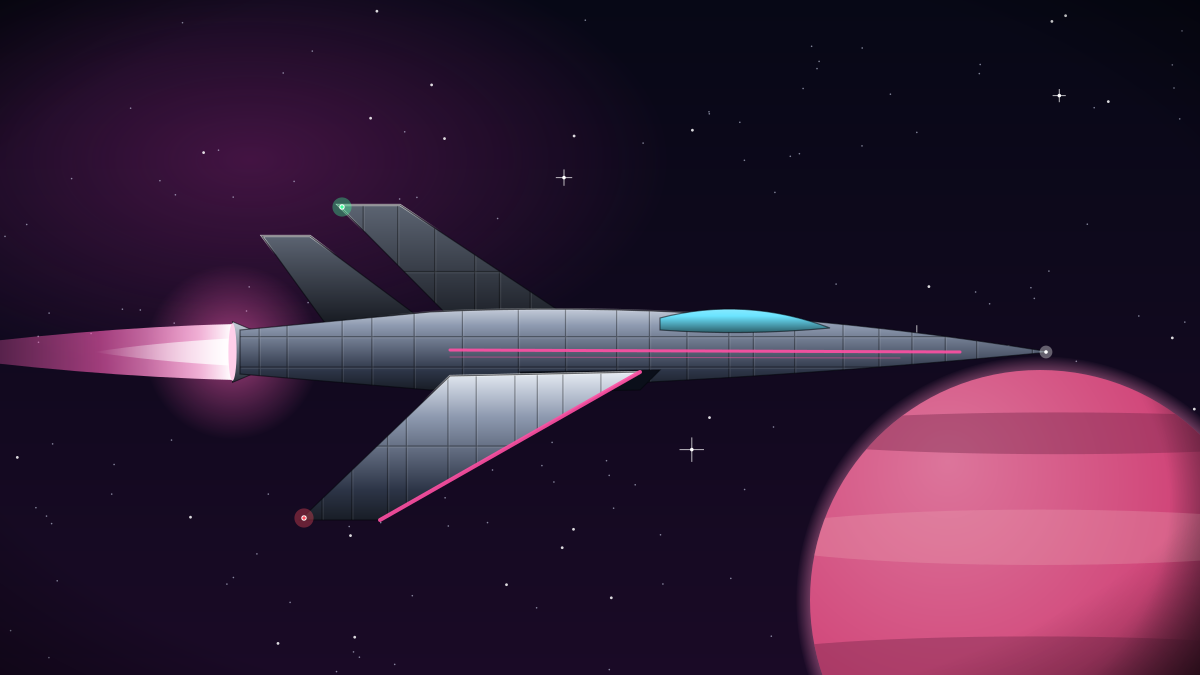
Our simulator hall sits two decks below the Halcyon shipyard at Kepler Yards on L5 Lagrange Station. It holds 14 full-flight simulators, one for every ship we teach plus spares for the busiest courses, and last year students logged just over 60,000 hours in them. Almost all of those hours were spent dealing with things going wrong.
That is the point. In a real ship you hope never to experience a drive-segment failure, a cabin breach or a reactor trim fault. In the simulator we can give you each of those a dozen times until your response is automatic. Every course in our catalogue has a simulator requirement, from 50 hours on the Flight Instructor Certificate to 240 on Deep Explorer Command.
The most complex machine is the Halcyon Starliner bridge, a full four-seat replica with a cabin-crew station behind it. Passenger Liner Command candidates spend 220 hours there, much of it handling situations where nothing mechanical has failed but a passenger is having a heart attack, the cabin crew have a security concern and the destination port is closed. The most physically demanding is the Aurora Mk II cockpit, mounted on a long-stroke motion platform that reproduces the hard accelerations of a 1,450 km/s courier.
Each simulator draws on a scenario library my team has built over eight years. It contains more than 3,000 faults, each tied to a real incident report or engineering analysis supplied by Halcyon and our hiring partners. Instructors can combine them, time them and, crucially, let students recover or fail.
We also learn from the simulators. Anonymised session data shows us where students struggle: the third hour of a long Atlas burn, the transition from cruise to proximity flight in a Valkyrie, or the moment a Leviathan crew has to reassign roles after a reactor alarm. That data shapes every syllabus revision.
If you would like to see the hall for yourself, the Simulator Night Challenge is open to students and alumni. Be warned: Oskar Brandt has designed the final round again.