News post
Landing a Cascade in Martian dust: why descent training never stops
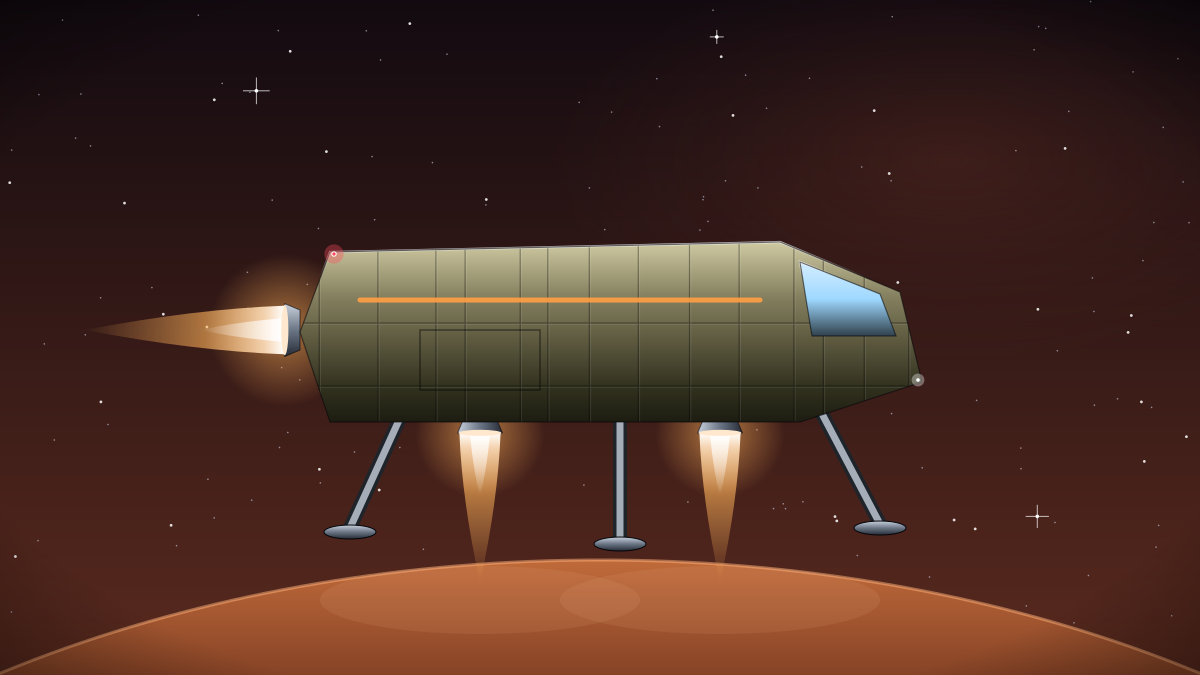
I have landed the Cascade Dropship more than 900 times, on Mars, Luna and Titan. The descent that still worries me most is a routine one into Martian dust, because the final thirty seconds are when a perfectly normal landing can turn into an accident.
The Cascade is a heavy lander, 72 metres tall, flown by two pilots and carrying up to 60 passengers or 220 tonnes of cargo. Its methalox engines are powerful but thirsty, burning 18 tonnes per 100 AU, which means a pilot cannot hover for long while making up their mind. Every descent needs a decision point: land or abort.
On Mars the main enemy is dust. As the engines approach the surface, they blast up a cloud that can blind cameras and confuse sensors in seconds. We call it brownout. Our Dropship Landing Certification spends weeks on it. Pilots learn to commit to a landing spot before the dust rises, fly the last metres on instruments, and recognise the moment when the safer choice is to abort to orbit.
The 12-week course starts with 110 simulator hours. We rehearse descents into dust storms using real hazard and weather data, landings on lunar polar ridges in low gravity, and the thick haze of Titan. Then students fly 80 hours in the Cascade, including at least 24 powered descents to unprepared ground on our Arsia Plateau pad. The check ride ends with a planned low-altitude abort, which many students find harder than the landing itself.
Settlement authorities are our main sponsors. New colony sites have no landing pads, no beacons and often poor maps, so they need pilots who can land on whatever is there. The Planetary Descent Endorsement is required for crewed landings at any new site on Mars.
Our first-time pass rate is 86 per cent and tuition is 132,000 credits. The next intake starts on 6 November 2187, with a few places left.
My advice to anyone considering the course is simple: respect the dust. Every Cascade pilot I trust has aborted a landing at least once when they could have pushed on.