Course
Dropship Landing Certification
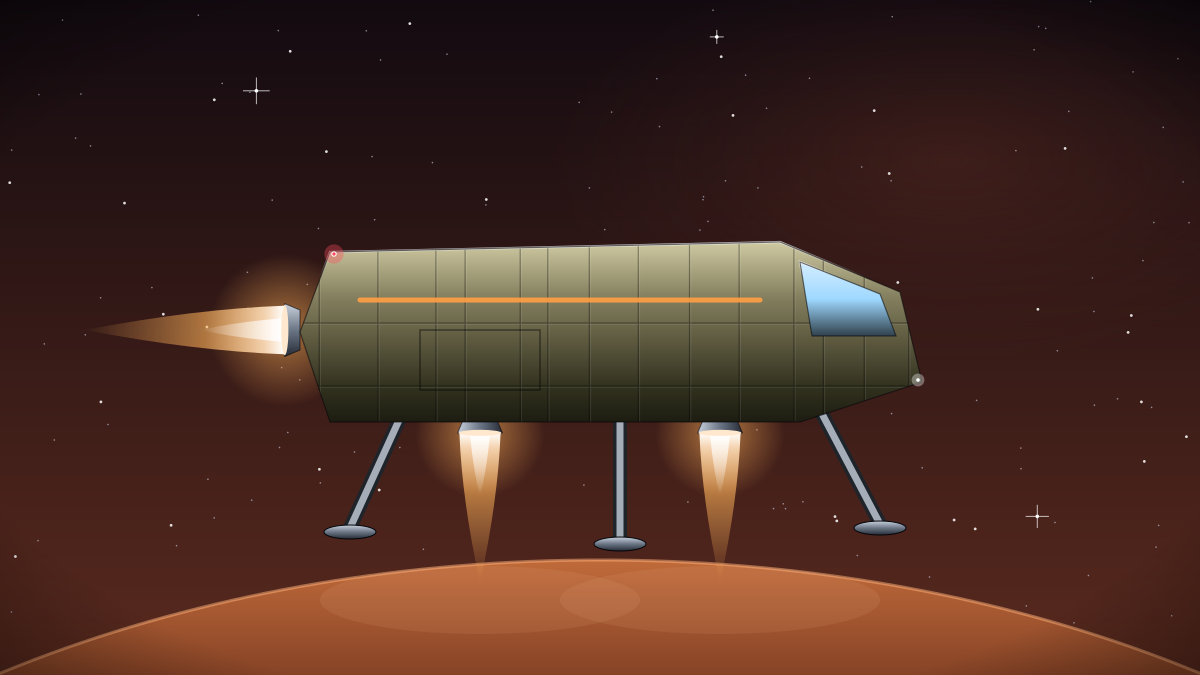
Getting people and cargo down to the surface of a planet, and back up again, is still the most dangerous few minutes in spaceflight. Dropship Landing Certification teaches pilots to fly the Cascade Dropship, Halcyon's heavy planetary lander, through those minutes as routinely as a shuttle crew docks at a station.
The Cascade is a two-pilot, 72-metre lander that carries up to 60 passengers or 220 tonnes of cargo, with a crew of six. Its methalox engines are thirsty at 18 tonnes per 100 AU, so fuel margins on descent are tight and every hover second counts. The 12-week syllabus covers entry corridors, terrain-relative navigation, dust and brownout management, landing on slopes and boulder fields, and aborts to orbit. Instructors use Mars hazard maps and landing-site surveys from the open data community in planning exercises.
Students spend 110 hours in the simulator, rehearsing descents in Martian dust storms, on lunar polar ridges and through Titan's thick haze, and complete 80 flight hours in the Cascade itself, including at least 24 powered descents to unprepared ground on the Arsia Plateau training pad. A short detachment to Shackleton Base adds airless, low-gravity landings on Luna.
Each cohort of eight is taught by two instructors, one per cockpit seat. Tuition is 132,000 credits. Settlement authorities and freight unions sponsor many seats. You need a Commercial Pilot Licence (Orbital) and 400 hours as pilot in command. The next intake starts on 6 November 2187, and a handful of places remain.
The first-time pass rate is 86 per cent. Graduates receive the Planetary Descent Endorsement, which is recognised by every settlement authority on Mars and required for crewed landings at new colony sites.