Course
Shuttle Operations
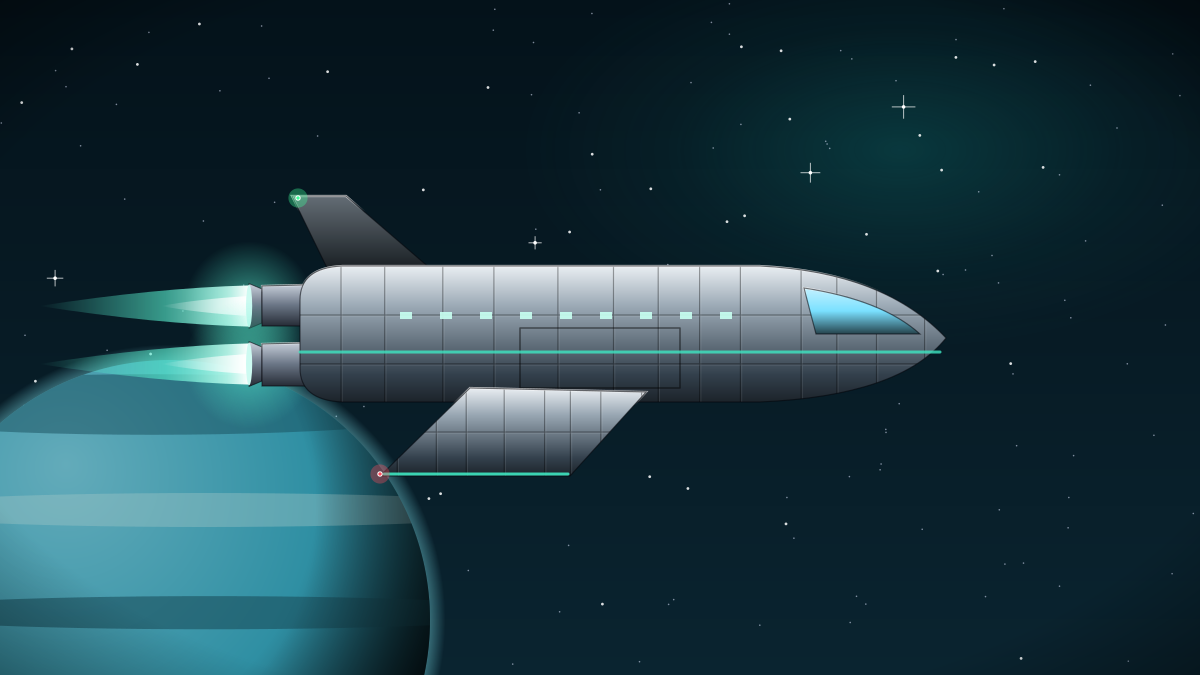
Shuttle Operations is where hobby flying becomes a career. Built around the Kestrel, Halcyon's workhorse light shuttle, this intermediate course teaches you to fly paying passengers and freight safely and on schedule through the busiest traffic in the solar system: the corridor linking Earth, Luna and L5 Lagrange Station.
The Kestrel is a two-pilot ship with a total complement of three and seats for eight passengers, so the course is built around multi-crew cooperation from day one. You will learn to work as both pilot flying and pilot monitoring, to run checklists aloud, to divide workload during a methalox ascent, and to challenge a colleague's error without drama. The 34-metre Kestrel cruises at up to 310 km/s and has a 14 AU range, which means most training sorties are short, dense and demanding: departure from Earth, a lunar transfer, a docking at Shackleton Base and a return, sometimes twice in one shift.
Across 12 weeks each trainee logs 70 flight hours in the Kestrel and 90 hours in our procedural and full-motion simulators, where instructors throw engine-out ascents, depressurisation and docking-port faults at you until the responses become automatic. A short module on the single-pilot Wren Microlifter is included, since many employers expect shuttle crews to cover surface-to-orbit hops as well.
A cohort of 12 trainees is taught by three senior instructors, and tuition is 86,000 credits including fuel, docking fees and examination costs. Applicants must already hold a Private Spaceflight Licence with at least 40 logged hours. The next intake begins on 24 November 2187. In 2186 our first-attempt pass rate on the commercial check ride was 88 per cent, and almost every graduate was hired within three months, many through sponsored seats from shuttle operators.
Successful candidates receive the Commercial Pilot Licence (Orbital), the qualification that lets you be paid to fly and the gateway to every type rating we teach.