Course
Salvage Tug Operations
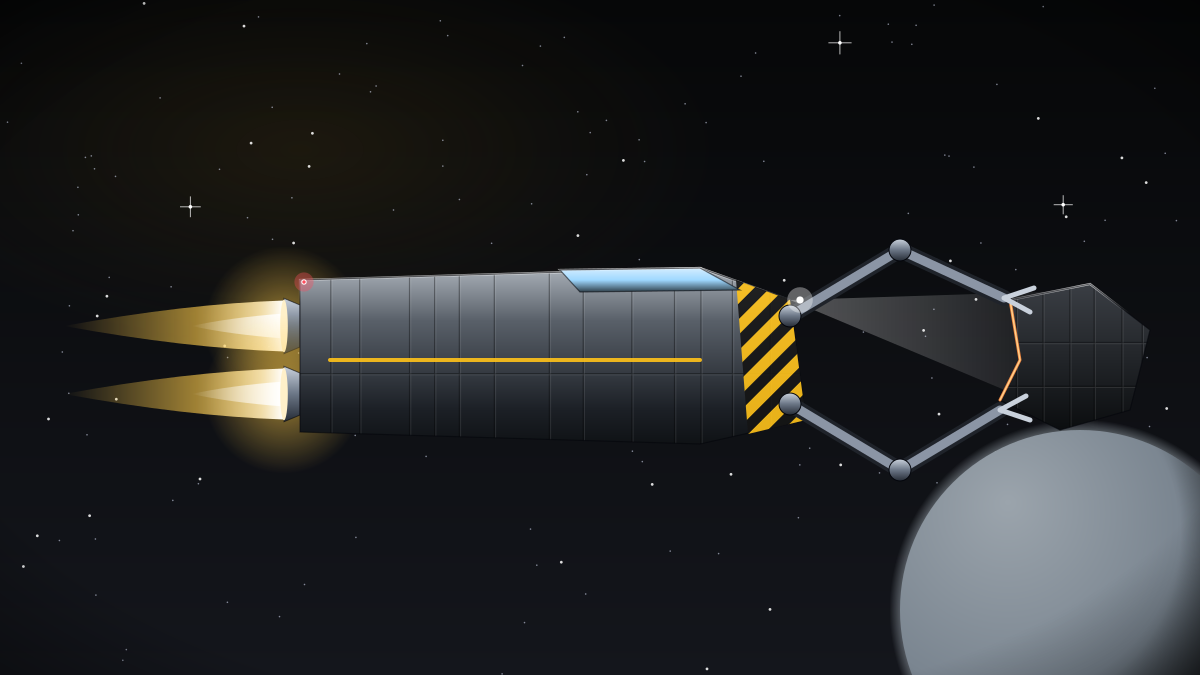
Somebody has to catch the things nobody else wants to touch: dead satellites, tumbling hulks, broken-up habitats and runaway cargo pods. Salvage Tug Operations trains pilots for that work aboard the Basilisk Salvage Tug, a 118-metre, two-pilot ship designed to grab, stabilise and tow objects many times its own mass.
The Basilisk is slow by Halcyon standards, topping out at 190 km/s on argon Hall-effect propellant, but it can haul 2,400 tonnes and its grapples and tethers are the most capable in civilian service. Over 10 weeks you will learn to read an object's tumble, plan a matching approach, set tethers without snapping them, and de-spin a target before towing it to a breaker yard or a safe disposal orbit. Ground school includes debris-field navigation, liability law for salvage claims and close coordination with the three-person deck crew who handle the rigging.
Students complete 80 simulator hours and 65 flight hours in the Basilisk, mostly on the Lumen Orbital Range near L5 Lagrange Station, where retired hulls are deliberately set tumbling for training. Later sorties take place around Luna and in the debris belts of low Earth orbit.
Each cohort of 10 trainees is led by two instructors. Tuition is 94,000 credits, among the most affordable of our type ratings. Applicants need a Commercial Pilot Licence (Orbital) and 250 hours as pilot in command. The next intake starts on 8 December 2187.
The first-time pass rate is 90 per cent. Graduates earn the Basilisk Salvage Tug Type Rating and work for salvage firms, mining cooperatives that need tailings cleared from their lanes, and orbital traffic authorities.